National Food Safety Month: What is a Foodborne Illness? Breaking Down Common Foodborne Illnesses

From our partners at the National Restaurant Association


Millions of Americans experience food poisoning each year, suffering symptoms like vomiting, diarrhea, and cramps. In some cases, those symptoms aren’t just disruptive – they’re life-threatening.

That’s why, to kick off National Food Safety Month 2024, we’re focusing on some of the most common culprits behind foodborne illnesses. While food can become contaminated by chemical, physical, or biological elements, we’ll be focused on biological hazards. Biological hazards in food known to make people sick are called foodborne pathogens. If you work with food, you should be aware of common pathogens and their telltale symptoms so that you can protect yourself and your community. Let’s dive in!

What is a Foodborne Illness?

According to the Food and Drug Administration (FDA), Foodborne illness occurs when people eat or drink food or beverages contaminated with pathogens, chemicals, or toxins. Regardless of how food is contaminated, foodborne illness is a significant public health challenge in the U.S. and worldwide. The FDA reports that 1 in 6 people get sick from contaminated food each year.

Your Guide to Common Foodborne Illnesses

While there are many ways for food to become contaminated, the reality is that most cases of illness in the U.S. are caused by a select handful of foodborne pathogens. In fact, data from the FDA reveals that five major pathogens commonly cause foodborne illnesses across the nation.


Let’s take a closer look at each pathogen to understand what it is, how it spreads and what restaurants and food industry workers can do to protect themselves and their customers.


1. NOROVIRUS

The leading cause of illness from contaminated food or beverages in the U.S. is norovirus infection, which develops after a person is exposed to any of the many noroviruses found nationwide. Since there are several types of noroviruses, there are many ways to get infected.

When ingested, norovirus causes a condition known as acute gastroenteritis, which causes inflammation in the stomach or intestines. Most people who get sick with norovirus illness get better on their own within about one to three days. However, carriers can still spread the virus a few days after recovery.

Signs and SymptomsSigns and Symptoms

Most people develop symptoms of norovirus infection 12 to 48 hours after being exposed to the pathogen.

  • Common: Diarrhea, vomiting, abdominal cramps, nausea
  • Other Symptoms: Mild fever, headache, muscle aches

How it SpreadsHow it Spreads

  • Direct contact with someone who has norovirus
  • Eating foods or drinking beverages contaminated with norovirus
  • Touching contaminated surfaces or objects and then putting unwashed fingers into the mouth

Noroviruses are infamously contagious. Employees who come into work sick with norovirus can easily pass the virus on to their colleagues and customers.

Prevention Tips for Food WorkersPrevention Tips for Food Workers

While it may be easy to spread norovirus, you can take steps to avoid getting yourself or others sick.

  • Wash your hands thoroughly and often, particularly when preparing food.
  • Clean and disinfect surfaces regularly.
  • Stay home when you’re sick until 48 hours after symptoms stop.

2. SALMONELLA

Few pathogens are as notorious as Salmonella, which are bacteria that can make people sick via contaminated food, beverages or water. Since Salmonella lives in the intestines of people and animals, it can also come from interacting with infected animals, their feces, or their surroundings.

There are some foods that are more likely than others to be exposed to Salmonella, including the following:

  • Fresh fruits and vegetables
  • Poultry and eggs
  • Meats
  • Milk
  • Dairy products
  • Seafood
  • Sauces and dry foods (yeast, spices, peanut butter, etc.)


Most types of Salmonella bacteria cause a condition known as salmonellosis, which typically lasts for about four to seven days. Others cause typhoidal illness or typhoid fever.

Signs and SymptomsSigns and Symptoms

Usually, symptoms of salmonellosis begin about six hours to six days after exposure to the bacterium. However, some people don’t show signs of infection for several weeks.

  • Common: Diarrhea that may be bloody, fever, stomach cramps
  • Other Symptoms: Nausea, vomiting, headache, lethargy

How it SpreadsHow it Spreads

  • Eating foods or drinks contaminated with the bacterium
  • Touching infected animals or feces and not thoroughly washing hands afterward

It’s important to recognize that foods contaminated with Salmonella often look and smell normal.

Prevention Tips for Food WorkersPrevention Tips for Food Workers

It can be difficult to wash Salmonella off food. As a result, the best ways to prevent infection involve killing or avoiding the bacteria entirely.

  • Thoroughly cook all food items to a safe minimum internal temperature.
  • Wash your hands regularly and thoroughly, especially after handling food.
  • Keep raw food items separate from cooked items.
  • Always store and display food at a safe temperature.

3. E. COLI

E. coli bacteria exists all around us. While most strains are harmless, certain types of E. coli can make people very sick.

These kinds of E. coli produce the Shiga toxin, which can cause severe health issues like blood clotting problems or kidney failure. An infection that develops from one of these bacteria may lead to a serious condition called hemolytic uremic syndrome (HUS). Over time, HUS can lead to permanent health symptoms and even cause death.

Signs and SymptomsSigns and Symptoms

In most cases, an E. coli infection causes gastrointestinal symptoms that may last for about two to nine days after exposure. The bacteria can also cause infections in the bloodstream, gallbladder, and other organs.

  • Common: Diarrhea that may be watery or bloody, severe abdominal cramps
  • Other Symptoms: Nausea, vomiting, low fever

One specific type of E. coli (enterotoxigenic E. coli, or ETEC) causes an infection known as traveler’s diarrhea, which causes severe diarrhea that sometimes occurs within just a few hours.

How it SpreadsHow it Spreads

  • Eating or drinking contaminated items (or touching food that has been handled by an infected person)
  • Eating contaminated foods that have not been thoroughly cooked
  • Coming into contact with the feces of an infected person
  • Touching an object or surface after it’s been touched by an infected person who has not washed their hands well enough

E. coli bacteria have been found in everything from ground meats to romaine lettuce and even commercially manufactured frozen cookie dough.

Prevention Tips for Food WorkersPrevention Tips for Food Workers

In addition to essential food safety habits like washing your hands regularly, taking steps to protect yourself and others from E. coli is fairly straightforward:

  • Cook ground beef to a minimum internal temperature of 160 °F.
  • Cook raw meats and eggs to a safe minimum internal temperature.
  • Wash raw produce under clean, running water.
  • Avoid drinking unpasteurized or “raw” milk and juices.

4. HEPATITIS A

There are a few types of hepatitis virus, but the one that’s most relevant to the food industry is the hepatitis A virus, also known as “HAV.” The term “hepatitis A” actually describes the disease of the liver that the virus causes.

Many people who get sick from HAV take weeks or even months to recover. Some people get so sick that they experience liver failure, and the condition can also be fatal, particularly for those with compromised immune systems.

Signs and SymptomsSigns and Symptoms

Adults who get sick with hepatitis A are more likely than children to develop symptoms. However, not everyone with the virus has symptoms, which means they may unknowingly pass it on to others.

  • Common: Diarrhea, dark urine or clay-colored stools, low appetite, nausea or vomiting, aches, fatigue, jaundice (yellowing of the skin and whites of the eyes)
  • Other Symptoms: Inflammation of the liver or liver damage

How it SpreadsHow it Spreads

  • Coming into direct contact with an infected person (shaking hands, for example)
  • Eating or drinking contaminated food or beverages

It only takes a little bit of the virus to make people sick, so it’s important to be thorough in your prevention habits.

Prevention Tips for Food WorkersPrevention Tips for Food Workers

Getting vaccinated against hepatitis A is one of the best ways to protect yourself from getting sick. Other things you can do to stay safe include the following:

  • Thoroughly wash your hands after using the bathroom, changing diapers, and before preparing or eating food.
  • Stay home from work if you show symptoms like nausea, diarrhea, or jaundice.

5. SHIGELLA

Last but certainly not least is Shigella, a bacterium that can spread through contaminated feces. These bacteria cause shigellosis, a condition that usually is mild and goes away by itself.

However, some cases of shigellosis can become severe enough to cause death. One type of Shigella (S. dysenteriae type 1) produces the Shiga toxin, just like E. coli can. This bacteria causes some of the most serious versions of the disease.

Signs and SymptomsSigns and Symptoms

Most people who get shigellosis experience symptoms for a few days, though some cases may last for weeks.

  • Common: Diarrhea that may be bloody, fever, stomach cramps
  • Other Symptoms: Vomiting, feeling the need to pass stool even with empty bowels

How it SpreadsHow it Spreads

  • Getting Shigella bacteria on your hands and then touching food or your mouth
  • Eating or drinking food or beverages prepared by an infected handler
  • Coming in contact with infected feces
  • Drinking contaminated recreational water (i.e., lake or river water)

The germs might also make their way onto foods that are grown in fields contaminated with Shigella-containing feces.

Prevention Tips for Food WorkersPrevention Tips for Food Workers

Reduce your chances of catching or spreading a Shigella infection by following these essential tips.

  • Thoroughly wash your hands before handling food, after going to the bathroom, or after cleaning up after someone who went to the bathroom.
  • Keep diapers in a secure and covered, lined garbage can.
  • Avoid drinking potentially contaminated water.
  • Stay home from work if you experience diarrhea or vomiting.

Learn More About Foodborne Illness

To take a deeper dive into common foodborne illnesses, how they can spread, and what you can do to prevent contamination in your operation, download our eBook, “The Science of Foodborne Illnesses and Outbreaks Pt. 1: The Most Common Foodborne Illnesses.”


Resource for restaurant employees with families impacted by Hurricane Debby

Our state is being has been impacted by Hurricane Debby, and  CORE (Children of Restaurant Employees) is here to help restaurant operations employees with legally dependent children if you face any of the following grant qualifications:  Medical diagnosis/crisis, injury, death of the employee, spouse or child, or the loss of home or place or work due to the natural disaster.  Based in Nashville, TN, they are a national non-profit serving our industry.

A CORE grant may cover costs for medical supplies, therapies, utilities, rent / mortgage, and other essential needs that a family might find necessary to navigate their specific circumstances. Each grant is unique and tailored to meet the applicants needs and documentation is required.

If you are a food and beverage service employee with a legally dependent child facing one of CORE’s grant criteria or you are directly impacted by your loss of home or work due to the recent catastrophe, visit www.COREgives.org to learn more and apply for a grant.  A family can also be referred online. We are grateful that organizations like CORE exists to provide support to our industry.


FRLA PARTNERS AGAIN WITH STRATEGIC VALUE MEDIA TO PRODUCE BUYERS GUIDE

The Florida Restaurant & Lodging Association is proud to partner again with Overland, KS-based Strategic Value Media, a leading nationwide provider of print and digital media solutions to the national, state, and local trade and membership associations, to produce the 2024 edition of the FRLA Buyers Guide, the premier resource of relevant products and services for residential restaurant industry professionals. This will be the 10th year that the Guide will be produced.

A representative from Strategic Value Media may contact you by email or phone to inquire if you want to enhance your listing in the Buyer’s Guide. Please know this is a legitimate call and that SVM is partnering with FRLA to provide our members this resource for advertising your products and services.

Like the 2023 version, the 2024 edition of the Buyers Guide will feature updated and expanded company and product listings, in addition to other valuable information relating to the restaurant industry. The Buyers Guide provides users with an efficient way to browse for goods and services and offers restaurant, hotel, and casino suppliers exceptional visibility by showcasing their products and services to a targeted, industry-specific buyer group.

The Buyers Guide is accessible through the FRLA website at frla.org and will be updated soon with new advertisements and information. To view the current Buyers’ Guide – click here. We encourage you to take advantage of this exceptional opportunity to highlight your products and services in the Buyers Guide. To learn more about advertising your products or services in the Buyers’ Guide, please email [email protected].

###

Kobé Steakhouse Celebrates 40 Years as Florida’s Favorite Teppanyaki Restaurant


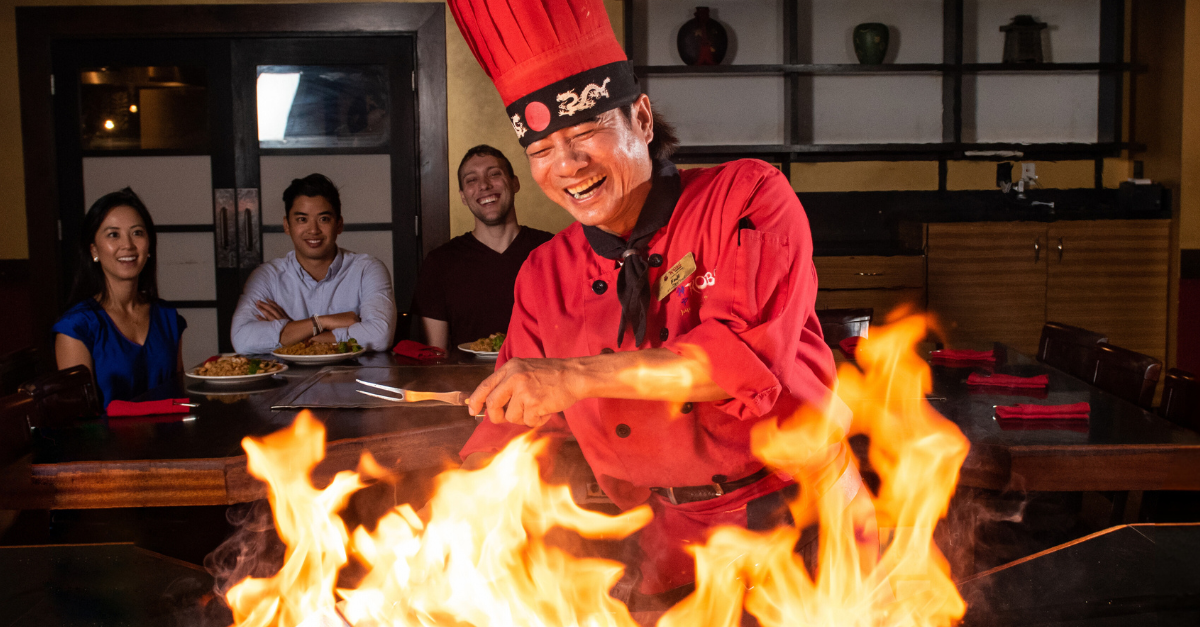
[Orlando, FL]: Orlando’s Kobé Ichiban Japanese Steakhouse is gearing up to celebrate forty years of delicious and fun-filled dining. With 13 locations spanning Central Florida and Tampa, the family-owned Teppanyaki restaurant has become a Florida restaurant staple that tourists and locals flock to each year. Kobé Steakhouse brings countless family and friends together through an interactive dining experience, where skilled chefs cook Japanese cuisine up close on an open stove with a theatrical flair, eliciting plenty of laughter and rumbling stomachs.

“So much has changed over the decades,” said Mr. Chau Nguyen, owner of Kobé Steakhouse. “But our desire to create a destination full of life and ignite happiness in all those who dine with us remains the ‘Kobe Way’ of how we do things at our company. These past forty years have exceeded our expectations.”

As for the future of Kobé Steakhouse, Mr. Nguyen and the Kobé team have no plans of slowing down. With their newest location off of West 192 in Kissimmee, their mission of providing a premium Japanese dining experience to communities across Florida remains the same. With menu updates, daily promotions and specials, and a top-tier reward program, Kobé has something for everyone.

No matter which location you choose to dine at this summer, Kobé Steakhouse promises a customized dining experience perfect for creating memories with family and friends.

“As I reflect on these years gone by, I’m reminded of every individual who has contributed to Kobé’s journey,” said Mr. Nguyen. “From our dedicated past and present employees who shape our strong company culture to our supportive community business partners, and our cherished customers whose unwavering support fuels our growth. They are all the backbone of our business. We are proud to serve them.”

Help the Kobé family celebrate 4 decades of business! Beginning July 8th, dine in and enjoy a teppanyaki dining experience at any location with their $40 Kobé Anniversary Menu. The limited-time menu also includes an option to add-on 6oz of Premium A5 Grade Japanese Wagyu Beef for only $60.

Follow Kobé on Instagram @Kobesteakhouse to find out more about their 40th Anniversary promotions, including an Instagram Giveaway!


FDA outlines new materials to help industry meet requirements in traceability rule

The FDA has published new resources to help industry comply with the Food Traceability Rule. These include:

In addition, the FDA has partnered with the Food Safety Preventive Controls Alliance (FSPCA) to develop training for the food industry on the Food Traceability Rule. Curriculum development has been initiated by a team including subject matter experts from FDA, industry and academia. The team is working to create training exercises to help food industry personnel to understand FDA’s Food Traceability Rule requirements. Training is anticipated to be available by mid-2025.

The Food Traceability Final Rule is a key component of the FDA’s New Era of Smarter Food Safety Blueprint and implements Section 204(d) of the FDA Food Safety Modernization Act (FSMA).

The Food Traceability Rule requires persons who manufacture, process, pack, or hold foods on the Food Traceability List (FTL) to maintain and provide to their supply chain partners specific information – called Key Data Elements or KDEs – for certain Critical Tracking Events or CTEs in the food’s supply chain. This framework forms the foundation for effective and efficient tracing of food.

The following example will walk through the Critical Tracking Events in a supply chain where Key Data Elements are required.

Abbreviations used:

• Key Data Elements or KDEs

• Critical Tracking Events or CTEs

• Food Traceability List or FTL

• Traceability Lot Code or TLC

• Raw Agricultural Commodities or RACs

In this scenario, fresh sprouts are being packed by the sprout grower for sale at retail. Key Data Elements (KDEs) are required for the fresh sprouts at the points indicated in the graphic. Seeds are not on the Food Traceability List, so the seed grower, seed conditioner and seed supplier are not covered by the rule. As the initial packer of the sprouts, the sprouter must maintain certain KDEs related to the growing, conditioning, packing and supplying of the seeds. All entities in blue are covered by the rule and must maintain a Traceability Plan, in addition to the KDEs.


Columbia Restaurant, Florida Hospitality Industry Mourns Loss of George Guito After 62 Years of Service, Profound Impact on Industry

We’re sad to share the news that George Guito, the general manager of the Columbia Restaurant in Ybor City and employee for nearly 62 years, passed away late this afternoon after a series of illnesses. He was 76.

George was more than a general manager. To Columbia’s third generation owners Cesar Gonzmart and Adela Hernandez Gonzmart, he was akin to their third son. To Columbia’s fourth generation, Richard Gonzmart and Casey Gonzmart, Sr., George was as close as another brother. To fifth generation’s Andrea Gonzmart Williams and Casey Gonzmart, Jr., he was “Uncle George.”

And to the staff of the Columbia, he was a constant, dependable man of few words. An ever-present force, he did whatever it took to keep the restaurant running smoothly, whether it was hanging the enormous chandelier in the Don Quixote dining room, cutting meat for hours as a young butcher, checking deliveries at the back door for accuracy or plumbing the fountain in the Patio.

“We have lost the last of the greats who spent his entire teen and adult life at the Columbia.”  Richard Gonzmart said Sunday evening.

Said Casey Gonzmart, Sr., “George, my friend, my adopted brother, ONE OF A KIND, Loyal and Devoted to The Columbia and Our Family like no other. God Bless You. May you rest in peace.”

Andrea Gonzmart Williams: “I cannot imagine the Columbia without him. It’s like a piece of my childhood is gone. He’s one of the last few people who truly knew my grandparents. He had more stories than anyone else. He could connect the dots when others couldn’t. I’m very much at a loss for words.”

Casey Gonzmart, Jr.: “We lost a true legend today! George’s memory will live on as long as anyone else who came before him! Rest well, ‘Uncle’ George! Don’t worry. We will take great care of the place as you had for over 61 years!”

————

A member of the Columbia Hall of Fame, George’s name is etched in the sidewalk in front of the Columbia in Ybor City, next to the names of the family members who have owned and operated the landmark since 1905.

The sidewalk tile, just a few steps away from the entrance of Florida’s oldest restaurant, reads, “GEORGE GUITO, DEVOTED SINCE 1962 TO THE COLUMBIA.”

Born and reared in Tampa, George got a job at the Columbia at age 15 — his official hire date May 20, 1962.  He came from a poor and hard-working family; his father worked as a cigar maker by day and a janitor by night. His mother cleaned in a hospital.

After finding himself in some trouble, George came to the Columbia referred by a friend. Cesar thought George too young to be scrubbing floors, but the teen insisted he needed the work and asked for a chance. George was as old as Cesar’s son, Casey. Over the years, he became as close to the family as one of its own. The manager could pay George only $35 a week, but he graciously accepted. It was $15 more than his mother’s wage. He worked six days a week at a brisk pace — the large, busy Columbia was quite a chore to clean.

In the book “The Columbia Restaurant: Celebrating a Century of History, Culture, and Cuisine,” George remembered his youthful fascination with Cesar and the Columbia. “Every day, Mr. Gonzmart would come and tell me how was I doing, and that’s the way I became friendly with him. I was really amazed with coming into a place this size and beautiful as it is. Besides that, the gentleman that’s in charge of the whole operation, he’s performing here nightly [on violin], and he’s going through the tables. It was really amazing.”

The young man had never met someone so respected and connected. George marveled at the celebrities of the day passing through: Bob Hope, Marilyn Monroe, Frank Sinatra and Carol Burnett “We’ve had kings here. We’ve had queens here. People coming here from all parts of the world.”

What impressed George most was the free meals for employees. To a 15-year-old who had gone hungry, having access to the ingredients of the cooking line was a godsend.

“I said, ‘Man!’ I was really amazed.”

George clearly saw Cesar as the center of everything. “It was all Mr. Gonzmart.” There was no general manager or chief of operations. His two assistants bore the title of maître d.’ He arrived to work at about noon each day and left after midnight, after his two concert sets and a late dinner.

Some thought Cesar could be demanding but George saw a dedicated businessman, a devoted artist, and a caring person. “Once you got to know Mr. Gonzmart, if you would take care of his place, he would do anything for you, help you out in any way. People that were working here, he was always asking them about the family and if they needed something.”

He often sat hungry locals down in the café and told the waiters he’d pay the bill. He gave countless loans, knowing they would go unpaid.

George became a busboy before long and worked odd jobs at the restaurant. Cesar returned his loyalty and found a way to reward George and the restaurant. He sent George to butcher school and paid the bills. “I think the name of the school was Tampa Butchering Professional Meat Cutting Association.” George became a certified butcher and worked with the Columbia’s meat and poultry. No longer a troubled Ybor boy, he gained a respectable career and brighter future.

He became part of the restaurant family in other ways. George soon got to know the Gonzmart-Hernandez clan well. Casey and Richard became his new brothers, and the family gathered every Sunday at the Gonzmart home.

Carmen Hernandez, Casimiro’s wife, did not drive. When George scratched together $35 to buy a 1950 Plymouth, management often enlisted him to drive Carmen home from the restaurant.

George Guito: “I would take her home and she would give me five dollars Back then, five dollars was a lot of money. Then she would tell me, ‘Oh, come in and have something to drink and eat something.’ They were really nice people.” He spent every Christmas with the Gonzmarts. When George got married, Cesar paid for the wedding reception at the Columbia. He then offered George the use of his credit card and El Dorado Cadillac, telling him to take them to Miami for his honeymoon.

———

George never forgot a lesson Cesar taught him, “I tried to talk intelligent to most of these people. Mr. Gonzmart always used to say, ‘If you talk intelligently, you sound intelligent. If you talk dumb, you sound dumb.’”

Back in the kitchen, George worked with Chef Vincenzo “Sarapico” Perez. He enjoyed his job, cutting beef tenderloins into filets, carving and trimming rib eyes, sirloins, and round steak. The Columbia’s menu was huge at the time, ballooning to more than twenty-five pages. That variety of dishes required many different cuts of meat.

George also remembered the earthy recipes and fresh seafood. Blue crabs were cheap and plentiful. The kitchen simmered tripe, ox tails and pig feet, red beans and rice. A Cuban dish called congri filled patrons with black beans, rice, and pork. Sarapico left after an illness, and George assumed more control in the kitchen. He became a jack-of-all-trades at the restaurant. George can cook dishes that no one else can remember, such as those named above. He is, in many ways, the Columbia’s collective memory.

“I know the kitchen inside and out. I can do anything that has to be done. I can cook. I can order the stuff. I can do basically anything.” In George Guito, Cesar gained a hard worker as loyal as a son. The Columbia’s struggle to stay afloat called upon all of George’s loyalty and know-how, and he delivered.

In the 1960s, before Columbia Sarasota had a dependable source of Hispanic ingredients, George Guito delivered to St. Armands Circle from Tampa countless times. In the days before the Sunshine Skyway bridge, George drove by way of Gibsonton and Rubonia. “They would get in this truck,” Casey says, “and go down U.S. 41, which wasn’t that developed in those days, and supply the restaurant as if it were an outpost somewhere out west. If you took the donkey trail and it was in the winter season, you probably took forever to come and go.” Workers at the Sarasota restaurant spent many an hour waiting for the daily truck to arrive. The tenuous supply line kept the restaurant alive.”

Beyond the esteem of the family and co-workers, George received special recognition in 2019 during Visit Tampa Bay’s annual meeting with an award presented by Richard Gonzmart.

“Tourism is up, but it’s the people in our industry who make it happen,” Richard told the audience. “There is one individual who has been truly special. On behalf of my family, I’m proud to honor an employee, a gentleman who is my brother, Mr. George Guito.”


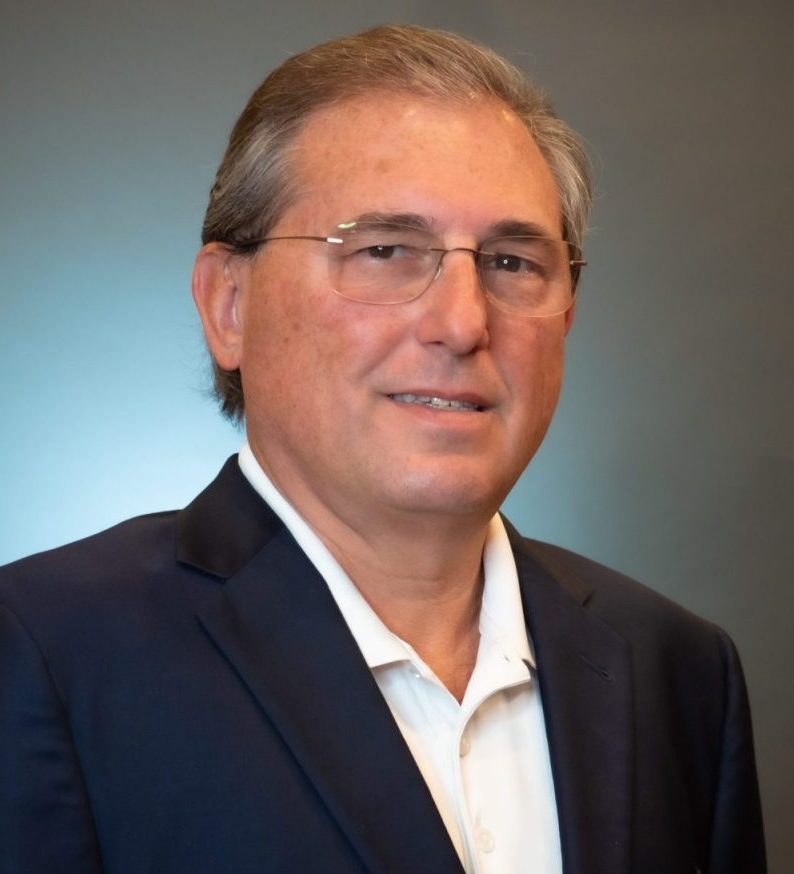
EXECUTIVE INSIGHTS: THE INTERVIEW SERIES, FRLA EXECUTIVE COMMITTEE – NICK SARRA

NICK SARRA, VICE CHAIRMAN, FRLA BOARD OF DIRECTORS EXECUTIVE COMMITTEE

PARTNER & CHIEF EXECUTIVE OFFICER, SALTWATER RESTAURANTS, INC., DESTIN

WELCOME TO EXECUTIVE INSIGHTS: THE INTERVIEW SERIES WHERE WE WILL BE SHARING A BIT MORE ABOUT FRLA’S 2024 BOARD OF DIRECTORS EXECUTIVE COMMITTEE. THIS MONTH, WE’RE EXCITED TO INTRODUCE YOU TO NICK SARRA, OUR VICE CHAIRMAN!


HOW DID YOU GET STARTED IN THE INDUSTRY?

I got started in the hospitality industry after realizing that working in my father’s manufacturing business wasn’t for me. My journey began at the front desk of Hotel Sonesta, where my mother had worked for many years. From there, my roles varied from dishwashing to serving. It became clear; owning a restaurant was my dream. Understanding every facet was crucial, so I pursued an education at Johnson & Wales University, earning degrees in Culinary Arts and Hospitality Management. My career took off from there, leading me from managing specialty restaurants in Washington D.C. to founding The Boathouse Landing Restaurant, Rockin’ Tacos and co-creating Saltwater Restaurants.

WHAT IS THE MOST REWARDING PART OF WHAT YOU DO?

Witnessing employees grow, from their first job with us to achieving their dreams, whether within the industry or beyond, is incredibly fulfilling. It’s a testament to how prestigious and viable a career in hospitality has become.

WHAT IS THE MOST IMPORTANT PIECE OF ADVICE YOU HAVE EVER GIVEN/BEEN GIVEN? 

Success isn’t about being the smartest; it’s about effort, integrity, and teamwork. Always stay humble and remember, the moment you think you’re invincible is when you’re most vulnerable.

WHAT EMERGING TRENDS IN HOSPITALITY DO YOU FIND MOST INTRIGUING?

The integration of technology and AI, from robotics to advanced POS systems, fascinates me. It’s about finding the perfect balance between innovation and maintaining the irreplaceable human touch in hospitality.

WHAT QUALITIES MAKE A SUCCESSFUL HOSPITALITY TEAM? 

A strong team thrives on communication, dedication to guest satisfaction, and the ability to work tirelessly, especially during the holidays in a tourist-driven market.

WHAT IS THE MOST INTERESTING PLACE YOU HAVE EVER TRAVELED TO?

Venice captivated me with its history and the resilience of its people. Croatia’s beauty also left a lasting impression.

FAVORITE FLORIDA DESTINATION?

Disney World stands out for its unparalleled magic and hospitality.

IF YOU COULD ONLY EAT ONE CUISINE FOR THE REST OF YOUR LIFE, WHAT WOULD IT BE?

Seafood, of course, with Italian cuisine as a close second.

IF YOU COULD DINE WITH ANY HISTORICAL FIGURE, WHO WOULD IT BE?

Henry Ford, for his revolutionary ideas on efficiency and labor management.

WHAT IS THE MOST MEMORABLE FLORIDA HOTEL OR RESTAURANT EXPERIENCE YOU HAVE HAD AS A GUEST??

Dining at Victoria & Alberts at Disney with my family and celebrating anniversaries at The Pearl in Rosemary Beach have been unforgettable experiences.

BEACH OR MOUNTAINS? 

Definitely Beach!

HOW DO YOU BELIEVE THE PRINCIPLES OF HOSPITALITY CAN BE APPLIED TO OTHER INDUSTRIES?

The essence of hospitality—caring for employees and customers—applies universally, emphasizing customer service and perseverance.

WHAT WOULD YOU SAY TO THOSE COMING UP IN THE HOSPITALITY INDUSTRY? 

Work diligently, uphold integrity, and foster teamwork. Success is achievable without undercutting others; collaboration is key.

WHY IS IT IMPORTANT FOR PROFESSIONALS TO GET INVOLVED WITH FRLA?

Engagement with FRLA offers a unified voice on critical issues, from minimum wage debates to industry advocacy, ensuring even the smallest operators are heard.

WHAT DO YOU HOPE TO ACCOMPLISH ON THE FRLA EXECUTIVE COMMITTEE?

I aim to amplify our industry’s voice in legislative arenas, expand membership, and address pressing challenges, further ensuring our industry’s strength and prosperity.


TO READ NICK’S BIOGRAPHY, VISIT OUR FRLA LEADERSHIP PAGE OR CLICK HERE.


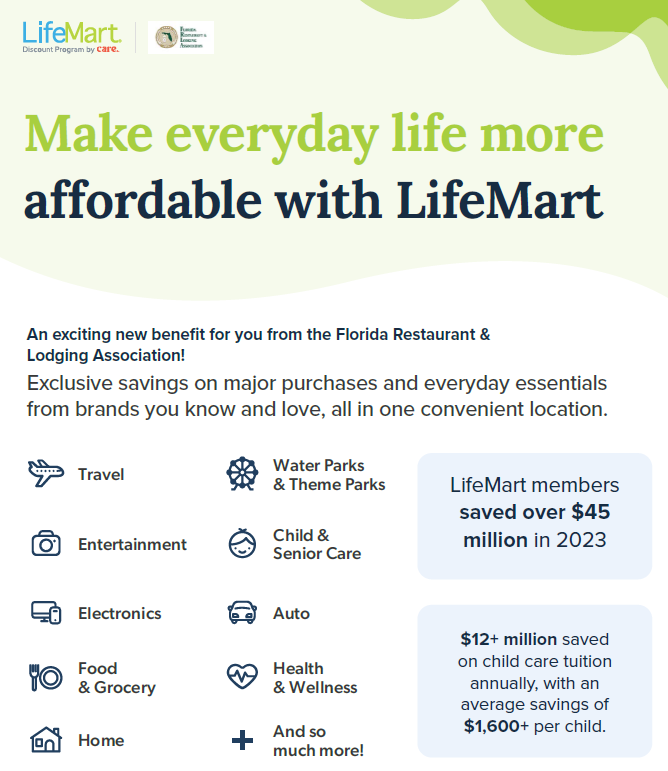
Make Everyday Life More Affordable with LifeMart

FRLA is excited to announce a new, high value benefit for your employees via Care.com and LifeMart. 

The Florida Restaurant & Lodging Association  has partnered with the LifeMart discount program to provide your employees access to exclusive savings on major purchases and everyday essentials from brands your employees know and love, all in one convenient location. With unlimited access your employees will enjoy discounts on child and senior care, travel, fitness, electronics, health & wellness and MUCH more. In 2023 alone, LifeMart members saved over $45 million – $12 million of that was on childcare tuition with an average savings of $1600 per child!

The best part? There’s ZERO cost to you or your employees – and there is NO administrative work needed from you. Registration is simple – print & share the attached flyer in breakrooms or environments where your team has access, and your employees can start saving today!

  • High value benefit provided to you as a member for your employees
  • No limit on savings, NO cost to you or your employees
  • Access anywhere, anytime with the LifeMart mobile app

Simply click here to Request a LifeMart Employee Poster, and our support team will email the poster to you!

  •  

Tractor Joins 1% for the Planet for Earth Month

This Earth Month, Tractor Beverage Co., a certified organic and non-GMO total beverage solution, is taking a monumental step forward in its commitment to environmental stewardship. We’re thrilled to announce our exhilarating new partnership with 1% for the Planet, an alliance that’s as natural as the ingredients in our drinks.


At Tractor, we believe that great food deserves equally great drinks, which is why our eco-conscious products boast a variety of diverse flavors designed to complement any meal and significantly elevate the dining experience. Our mission extends beyond quenching thirst—it’s about contributing to a healthier planet. Partnering with 1% for the Planet marks a significant stride in the collective journey towards a more sustainable future, demonstrating our dedication to making a positive impact on the environment.


Being Responsible Never Tasted So Good


Our partnership with 1% for the Planet aligns with our ethos of working with like-minded entities. It’s not just about offering tasty beverages—it’s about ensuring that our business practices contribute to the well-being of our planet. By pledging to donate 1% of our annual sales to environmental causes, we’re joining a global movement of businesses and individuals committed to protecting the earth.


Tractor’s 8.5:1 non-carbonated concentrates and easy-to-use syrups embody our commitment to quality and sustainability. Aseptically processed and packaged for convenience, our concentrates make serving delightful beverages a breeze, whether at events, behind the bar, or at self-serve stations. With each 12-pack of 32 fl. oz. concentrates yielding approximately 28.5 gallons of prepared liquid, the possibilities are endless. Get creative with your bar menu or serve our delicious concoctions frozen as a slushy to add a fun twist to your beverage offerings.


Our syrups, designed for simplicity and efficiency in fountain soda dispensing machines or bar guns, reflect our dedication to excellence. The bag-in-box styling ensures ease of use and interchangeability with other beverage products, promising a premium beverage experience that complements your culinary philosophy.


Elevating the Culinary Conversation, One Sip at a Time


In celebration of Earth Month, Tractor Beverage Co. invites you to join us in this meaningful partnership with 1% for the Planet. Together, we can make a difference in the world, one sip at a time. Whether you’re a large restaurant or a small café, our mission is to support you in making your beverage program more eco-friendly, offering your customers a flavorful, health-conscious experience.


Let’s raise our glasses to a future where every drink not only tastes good but does good. With Tractor Beverage Co. and 1% for the Planet, we’re turning the tide towards a more sustainable and flavorful future. Cheers to making every sip count!


For more information on Tractor Beverage Co. and our partnership with 1% for the Planet, visit our website. Together, let’s make Earth Month not just a celebration, but a way of life.

LEARN MORE HERE

The Florida Restaurant & Lodging Association 28TH Annual Key West Songwriters Festival Presented by BMI Announces Ticketed Shows for May 1-5

KEY WEST, Fla.April 3, 2024 /PRNewswire-PRWeb/ — The Florida Restaurant & Lodging Association Key West Songwriters Festival presented by BMI announced details behind 16 ticketed shows during the five-day event, set to take place on May 1st through May 5th. In its 28th year, the festival will host performers such as Cole SwindellRobert Earl KeenJeffrey SteeleLori McKenna, Thompson Square, Robert Randolph, Fancy Hagood, Ryan HurdTommy SimsChase MatthewKameron MarloweRebecca Lynn HowardBridgette Tatum, and more. Tickets on sale Friday, March 29th at 12 pm via keywestsongwritersfestival.com.

Wednesday, May 1
Key West Theater, 8 PM
Bridgette TatumBobby PinsonChuck CannonTommy SimsJeffrey Steele

Thursday, May 2
Key West Theater, 4 PM
Taylor PhillipsChase MatthewThomas EdwardsKree HarrisonRebecca Lynn HowardElisha HoffmanLori McKennaLuke Laird

Fury Sunset Sail, 6 PM
Thompson Square
Key West Amphitheater, 7 PM
Cole Swindell, Restless Road, Mackenzie Carpenter
Key West Theater, 8 PM
Chuck CannonDylan Altman with Guthrie TrappRobert Randolph Band

Friday, May 3
Back Stage Listening Room at Key West Theater, 3 PM
Coffee, Concert, & Conversation with Jeffrey Steele
Key West Theater, 4 PM
Ryan HurdAlana SpringsteenKameron MarloweMarti FredericksenDavid Ray StevensLiz RoseCassidy Daniels

San Carlos Institute, 8 PM
Lee Thomas MillerWendell MobleyRobert Earl Keen
Key West Theater, 8 PM
James SlaterDanny MyrickPaul JenkinsClint DanielsRonnie BowmanTrent Tomlinson
La Te Da, 8 PM
Jessica WachsHarper GraceSonia LeighSheena Brook, Fancy Hagood, Kree Harrison

Saturday, May 4
Key West Theater, 10 AM
Bloody Mary Bash featuring Robert Earl Keen & Friends
Fury Sunset Sail, 6 PM
Barrett Barber, Carlyle Griffin
Key West Theater, 8 PM
Fancy Hagood, Patrick MurphyRenee BlairDavid FanningRob RagostaLaci Kay BoothDoug JohnsonTim NicholsJackson Nance, Dax
San Carlos Institute, 7 PM
Garrett BradfordScott Sean WhiteMorgan Lee PowersRussell SuttonPaul JenkinsJack IngramLiz RoseAaron Barker

Sunday, May 5
Williams Hall12:30 PM
Rebecca Lynn HowardElisha HoffmanTommy Sims
Key West Theater, 8:00 PM
All Star Encore featuring Earl Bud LeeTaylor PhillipsAlana SpringsteenDanny Myrick, and more to be announced


The Key West Songwriters Festival is an internationally recognized festival and the largest of its kind. Bringing together industry veterans and newcomers alike, the event gives festival goers insight into the stories and inspiration behind the music industry’s biggest hits. La Te Da and Williams Hall join the festival as new venues for this year’s ticketed shows.

“The historic La Te Da Hotel, once the home and factory of a local cigar manufacturer, is now an all-in-one entertainment complex. Between its accommodations, restaurant, multiple bars, and colorful outside patio, the venue is practically a magnet for late-night revelers” (Conde Nast Traveler). Williams Hall reopened in 2020 after a three-year restoration and modernization. For more than 100 years, the iconic church has been an important part of the spiritual and architectural landscape of Key West. Through a variety of services, classes, lectures and meetings, Williams Hall provides learning opportunities for young teens, social activities for the 50+ community, and cultural programs for all ages.

In addition to ticketed events, attendees can enjoy over 50 free shows throughout the island in bars, restaurants, resort beaches, and Rams Head Southernmost, the official festival headquarters.

“We’re excited to offer different experiences, from small intimate performances in an old church to a high energy concert at a picturesque island amphitheater, all aimed at creating unforgettable moments for festival goers”, said Kyle Muehlhauser, co-owner of the Key West Songwriters Festival and Rams Head Presents.

Landmark free events at the festival include the kickoff party featuring Dylan Marlowe, Heartwreckers, and Kristen McNamara at Sunset Pier on Wednesday, May 1st and the Duval Street show featuring Dallas Davidson and special guests on Saturday, May 4th. Additional free events and full festival schedule to be announced in the coming weeks along with the release of the official mobile app available for both Android and iOS users.

For up to date festival information visit keywestsongwritersfestival.com or follow on social media: Facebook  and Instagram

About BMI:
Celebrating over 80 years of service to songwriters, composers, music publishers and businesses, Broadcast Music, Inc.® (BMI®) is a global leader in music rights management, serving as an advocate for the value of music. BMI represents the public performance rights in over 22.4 million musical works created and owned by more than 1.4 million songwriters, composers, and music publishers. The company negotiates music license agreements and distributes the fees it generates as royalties to its affiliated writers and publishers when their songs are performed in public. In 1939, BMI created a groundbreaking open-door policy becoming the only performing rights organization to welcome and represent the creators of blues, jazz, country, and American roots music. Today, the musical compositions in BMI’s repertoire, from chart toppers to perennial favorites, span all genres of music and are consistently among the most-performed hits of the year. For additional information and the latest BMI news, visit bmi.com, follow us on X and Instagram @BMI or stay connected through Broadcast Music, Inc.’s Facebook page. Sign up for BMI’s The Weekly™ and receive our e-newsletter every week to stay up to date on all things music.

About Rams Head:
Rams Head Presents owns and operates Rams Head On Stage in Annapolis, Maryland which has been recognized as the Top Club under 500 seats in the world by Pollstar Magazine. Rams Head also provides programming for Maryland Hall for the Creative Arts in Annapolis, Maryland and Key West Theater and The Key West Amphitheater in Key West, Florida. Rams Head Presents purchased the Key West Songwriters Festival in 2021 and presented the inaugural Annapolis Songwriters Festival in September 2022. The festival successfully returned in 2023 and once again in 2024. Rams Head Group is a family owned and operated restaurant company since 1989. Rams Head Group currently owns and operates four restaurant locations in Maryland: Rams Head Tavern in Annapolis, MD; Rams Head Roadhouse in Crownsville, MD; Rams Head Shore House in Stevensville, MD; Rams Head Dockside in Glen Burnie, MD and a fifth location in Florida: Rams Head Southernmost in Key West, FL. For additional information visit ramsheadpresents.com | ramsheadgroup.com.

SOURCE Rams Head Group