The Role of Artificial Intelligence in Restaurants

The Role of Artificial Intelligence in Restaurants

by Michael L. Kasavana, Ph.D., CHTP, CFTP MSU/NAMA Professor, Emeritus IFBTA Education

Executive Summary

As prolonged wait times, production mistakes, supply chain challenges, and labor shortages continue, restaurants are turning to artificial intelligence (AI) to alleviate and correct problem areas. While the popular thought of AI in restaurants congers up images of kitchens staffed by trained robots, this by no means captures the realities of the technology. The most common ways AI is changing restaurant operations is by reducing human errors, containing escalating costs, enhancing production accuracy, adherence to safety standards, and redefining the customer experience. Restaurant operators can benefit from AI processes designed to increase capacity, advance forecasting precision, and accelerate production, while enabling growth. Additionally, AI-enabled machines and virtual assistants can be assigned to effectively conduct customer communications, reservations, and recommendations while providing adapted ordering.

The International Data Corporation (IDC), a global provider of information technology and publisher of the report, ‘AI Strategies View 2021 Survey’ identified the primary business objectives of AI as accelerating innovation, improving operational efficiency, and enhancing customer experiences.

Survey results basically established AI as the key to sustainable competitive advantage. Lightspeed analytics’ 2021 Global State of the Hospitality Industry Report’, projected the growth of AI in US restaurants at a steady pace for the foreseeable future. The study noted that at least fifty percent of operators were planning to implement some form of AI technology in the near term and revealed forty- seven percent of full-service restaurant (FSR) operators and thirty-seven percent of quick service restaurant (QSR) operators credited AI with the ability to streamline operations and help survive the pandemic.

AI can be divided into three main disciplines: machine learning, computer vision, and natural language processing. Machine learning involves mathematical algorithms that are capable of drawing conclusions from processed data, over time. For example, the ability to accurately forecast sales volumes based on historical observations. Computer vision involves acquiring high-level understanding based on digital images or videos. For example, developing visual authentication using facial recognition. Natural language processing is concerned with the interactions between computers and human language. For example, the process of transcribing voicemail into text. Suffice it to say, the restaurant industry is finding credible ways to apply artificial intelligence though insights and expectations gained via data processing.

AI Life Cycle

In the phData guidebook ‘How to Implement a Successful AI strategy’, the authors point to the stages of an AI project life cycle. The four project stages being: discovery, modeling, deployment, and monitoring.

Stage 1: Discovery – collecting relevant information that can guide strategic decisions is critical to a successful AI solution. Discovery centers on use-case situations. Subcategories include gathering, exploring, and understanding.

Stage 2: Modeling – operationalizing AI solutions require identifying infrastructure components that support a restaurant application. Subcategories include experimenting, model training, and validating.

Stage 3: Deployment – selecting the most appropriate AI and ML applications can be difficult given the increasing number of suppliers in the space. It is important to identify workable and feasible solutions. Subcategories include serve modeling and integrating.

Stage 4: Monitoring – probably is no restaurant that is completely prepared to pursue an AI initiative without experiencing gaps and oversights prior to reaching a fully deployable solution. Subcategories include logging, visualizing, and alerting.

AI Benefits

Artificial Intelligence combines multiple concepts of mathematics, statistics, physics, and computer science in a way that formulates a feasible solution. AI enables a computerized device to mimic human behavior and perform tasks that normally require human intellect. AI captures data from a surrounding environment and reacts to it in a way that enables multi-tasking with minimal resource displacement. AI applications include learning, reasoning, and perceiving using machine learning, computer vision, and natural language processing. The objective of AI is to drive business processes with creativity and innovation.

AI technology applied in restaurants can interact with customers, take orders, interface with point of sale (POS) systems, cycle production to service, and perform many other functions. A few of the broad benefits of applying AI in restaurants, include cutting costs, reducing errors, customizing orders, improving customer service, and identifying new customers:

  • Cost containment – AI technology can be used to automate repetitious tasks, such as taking reservations or entering orders into a POS terminal. Efficient order capture, forecasting, and job streamlining can result in less money being spent on operations, thereby leading to lower overall
  • Error reduction – human error is attributable to many things that can go wrong in a foodservice business. For example, a server might misunderstand a customer’s order, resulting in production of an incorrect menu Given AI order capture and placement is digital, there are fewer errors.
  • Customized orders – AI provides enhanced customer control during the ordering process thereby providing a platform for more personalized ordering.
  • Improved customer service – by embracing AI’s ability to perform specific tasks, employees are free to focus on providing exceptional customer service.
  • Identifying new customers – AI technology can improve marketing efforts that allow the development of customer profiles to identify new target markets. In addition, AI can help with retaining customers through remarketing efforts that incentivize repeat

AI Genres

AI can be divided into at least three distinct genres: 1- machine learning (ML), 2- computer vision (CV), and 3- natural language processing (NLP).

Machine learning takes AI to the next level. ML technology allows computers to not only retain   data but also to apply complex formulas to generate predictions about events or human behavior based on historical patterns. Machine learning is a field of inquiry devoted to understanding and building methods that leverage information to improve task performance. It is a part of artificial intelligence that is able to learn and adapt without following explicit instructions. ML relies on algorithms and statistical models to analyze and draw inferences from data patterns. Machine learning is used by platforms like YouTube TV, Netflix, and Spotify that suggest new content based on a user’s personal preferences. Similarly, restaurant AI applications can promote menu specials and upselling to candidate customers given ordering history.

Computer vision is an interdisciplinary scientific field that deals with how computers can gain understanding from digital images or video. Computer vision is a field of AI that enables systems to derive meaningful information from digital, visual inputs and, in turn, to take actions based on the information. Different types of computer vision include image segmentation, object detection, facial recognition, edge detection, pattern detection, image classification, and feature matching. The goal of CV is to enable computing devices to correctly identify an object or person and to take appropriate action.

Natural language processing (NLP) refers to the branch of AI that enables computers to understand text and spoken words in much the same way human beings do. NLP is concerned with programming computers to process and analyze large amounts of data. Apple’s Siri, Google’s Hey Google, Microsoft’s Cortana, and Amazon’s Alexa are examples of personal digital assistants (PDAs) capable of recognizing a user’s voice and applying AI in response to queries. Additionally, spell check, autocomplete, and spam filtering are examples of other NLP in action.

AI in Restaurants

With respect to restaurants, many AI solutions are intended to automate rote tasks or job functions. Equally important are related cost savings and marketing strategies. Note: the following twenty foodservice use cases are representative, but not assumed exhaustive.

Integrated Inventory and Purchasing–tracking historical inventory and purchasing data in search of trends leading to real-time recommendations

Demand Forecasting – menu item sales projections emanating from transactional data, bundling campaigns, digital marketing, cross-selling, and upselling.

Predictive Maintenance – embedded scheduling benchmarks enabling enhanced maintenance of operational and transactional procedures.

Task Automation – the reduction or elimination of repetitive tasks based on the redesign of functions through automated processes.

Virtual Assistant – customer use of smart device to search for restaurants, locate reviews, menus, and placing ordered and payment via a smart device.

Proactive Ordering – machine learning-based decision technology to predict what menu offerings are most likely to be preferred by customers.

Voice Recognition – phone answering technology capable of taking messages, booking reservations, building waitlists, and voice ordering with POS integration.

Facial Recognition — recognizes customer at the drive-thru, displays past orders, and allows for payment via face identification.

Order Clarity – AI platform capable of handling complex, multilingual, multi- accent, and multi-item conversational ordering.

Robotics – the role of robots performing hosting, production, and service processes in restaurants. Also, implementation of drone devices.

Loyalty Programming – monitoring and management of marketing strategies designed to encourage, reward, and incentivize business

Automated Marketing — AI tools available for digital marketing campaigns, emails and social media posts aimed at maximizing views and click-throughs.

Chatbots – similar to online chatbot adjustments can be made for restaurant assistance in handling guest queries and avoiding unanswered contacts.

Staff Scheduling — AI-enabled software can correlate staffing and sales data to determine trends and patterns in peak and slow time traffic requirements.

Self-Service Kiosks – devices that increase capacity and accelerate ordering, preparation, and payment while providing the power to control and customize.

Personalized Service – customer data collection from online ordering and digital marketing can lead to personalized services.

Waste Reduction — reducing food waste by fine tuning purchases to meet inventory needs and thereby avoiding expiration dates and excessive buying.

Customer-facing — conversational AI apps can greet customers, take orders, transfer orders to point of sale (POS) systems and perform related functions.

Optimized Delivery — AI can assist delivery drivers locate the most efficient routes, utilizing real- time map data, for multiple deliveries in a single trip

Delivery Tracking – enables awareness of progress by delivery services by allowing customers to view a tracking map with text message updates.

Industry Experiences

Briefly, Checkers & Rally’s found that an AI voice assistant had nearly one-hundred percent accuracy in taking drive-thru orders, all without staff intervention. Domino’s Pizza successfully uses drone delivery to deliver pizza orders, while Marco’s Pizza employed proprietary voice-to-text ordering using conversational AI. Cali-Burger employed Flippy the burger-flipping robot to prepare orders. The RoboBurger vending machine relies on a robo-chef platform to grill patties, toast buns, dispense condiments, plate the item, and deliver it piping hot in about six minutes. Chick-fil-A restaurants are testing AI-enabled self-driving autonomous vehicles for delivery. KFC and Wendy’s have both implemented smart kiosks to customize customer experiences and inter-activities.

In more detailed examples, the experiences of McDonalds, Sodexo, Coca-Cola, and Uber Eats represent important, and different, AI models for industry development.

McDonalds Example

McDonald’s created McD Tech Labs after its 2019 acquisition of Apprente, a voice technology firm, which in turn followed its earlier acquisition of Dynamic Yield, a firm that specialized in personalization and decision logic technology. In 2020, McDonald’s announced its Accelerating the Arches growth strategy, which included an emphasis on the 3 D’s: Digital, Delivery and Drive-Thru and integration with AI technologies. The Apprente technology, for example, uses AI to understand drive-thru orders in a way that would automate drive-thru lanes with the potential of replacing drive-thru staff members.

As of December 2021, McDonald’s offers drive-thru service in more than 25,000 locations, including 95% of all US operations, representing 70% of sales in top markets. In addition to implementing drive-thru innovations like express pick-up, express drive-thru, and smaller on-the-go locations, McDonald’s is also looking to improve ordering and payment functions. Apprente technology has been described as a voice-based platform for complex, multilingual, multi-accent, and multi-item conversational ordering. McDonald’s hopes that using the solution’s natural language processing and machine learning capabilities have created a faster, simpler, and more accurate drive-thru order-taking process. Reported results include reducing the time it takes to serve drive-thru customers by thirty seconds with increased customer satisfaction. Accompanying such success if the fact that automated order-taking scores an 85% accuracy rating with close to 20% of orders requiring human intervention.

McDonalds is also focused on order prediction based on digitization embedded into smart digital displays. As part of its Accelerating the Arches effort to make the drive thru as efficient and convenient,

McDonald’s purchased Dynamic Yield to leverage its decision technology to add personalization and modernize the customer experience. Dynamic Yield is a machine-learning solution that captures customer purchases and links them to presentations on digital ordering displays. In other words, the application digitized the point-of-sale process. Tracking such variables as time of day, order selections, traffic velocity, item popularity, and weather conditions. As a result, McDonald’s can offer digital displays that suggest popular items by weather or specific day part. Measuring traffic can also lead to the displays suggesting faster-to-prepare items to alleviate drive-thru slowdowns. In late 2021, McDonalds sold Dynamic Yield to Mastercard, which plans to continue to work with the fast-food company. McDonalds has stated a preference for investing in the 3D’s: digital, delivery, and drive thru.

Sodexo Example

Sodexo is one of the largest foodservice contractors in the US and continues to focus attention on increasing the convenience of its offerings. By leveraging digital and technological innovation, the company is striving to gain a competitive advantage over its competitors on college campuses. Digital engagement by younger consumers and density have made college campuses a target for delivery innovation. As a result, the company will add virtual brands, ramen vending machines, and checkout-free grocery stores at several campuses. It will deploy three delivery-only virtual brands in partnership with Virtual Dining Concepts, which offers brands like MrBeast Burger, Mariah’s Cookies, and Buddy V’s Cake Slice, on a mobile app. Virtual brand meals will be delivered via robot. In addition, the company recently announced a partnership to bring 1,000 delivery robots to college campuses. Perceiving its customers as having three important concerns (convenience, choice, and quality) making innovation, digital, and social media promotions take on a unique role. An autonomous vending machine manufacturer is partnering with Sodexo to deploy ramen and udon noodle machines to several campuses. These machines will offer meals after campus dining halls close, bridging a common gap in university foodservice offerings. In addition, the company will offer Eat>NOW autonomous campus grocery stores to its high-tech vending and virtual dining concepts with robot delivery services. Sodexo’s new offerings and partnerships with delivery and restaurant tech companies highlight the blurring lines between institutional foodservice and changing restaurant offerings.

Coca-Cola Freestyle Example

Throughout its value chain, Coca-Cola creates and collects a significant quantity of data, including sourcing, production, distribution, sales, and consumer feedback. As a result, Coca-Cola is continuously faced with the challenge of effectively leveraging aggregated data. Coca-Cola Freestyle is an innovative fountain drink dispenser (released in 2008) that allows customers to combine beverages and flavors via an interactive touch-screen display. These fountain drink dispensers are popular, with more than 50,000 units in operation, dispensing 14 million beverages per day.

In order to use the Coca-Cola Freestyle mobile app, consumers need to register using an established social media account. Coca-Cola then applies AI to analyze the social media content of its customers, generating insights on where, when, and how its products are consumed. Based on the consumer behavior and demographics analysis, Coca-Cola can identify which products are popular in which geographic areas. Coca-Cola’s ability to leverage such detailed and comprehensive data provides ways to better serve its customers.

Coca-Cola can use the network of Freestyle machines to acquire a knowledge of how tastes and beverage preferences differ among its customers thanks to AI algorithms in its machines. The data is critical in determining when, where, and how to manufacture and sell new products. For example, collected data from these self-service machines, enabled Coca-Cola to uncover valuable information on client preferences. This research resulted in the launch of at least two new products: Sprite Lymonade and Orange Vanilla Coke. Freestyle machines continue to provide on-demand access to more than 200 sparkling and still beverages, including more than 117 low- and no-calorie options, as well as more than 100 unique variations exclusively offered through these dispensers.

Uber Eats

Uber Eats’ picked up ordering at various stadiums, piloting test autonomous delivery, launching voice ordering and expanding its vouchers program to general consumers to use at events like weddings, food ordering, or rides. Uber Eats is currently testing and implementing voice ordering, starting with English-language capabilities before bringing additional languages online. The service integrates with Google, allowing customers to say a phrase like “OK Google, order food from Sweetgreen,” which would trigger the Uber Eats app. When the app pulls up, the customer can place an order with the requested restaurant via voice. Google Assistant will confirm the order details, and the customer can change or submit the order hands-free through the app. Initially, the Uber Eats’ voice ordering function will be available only on Android devices with other devices launching in the future.

Grubhub added voice ordering through Amazon Alexa in 2017, but it doesn’t appear to be an Alexa skill anymore, according to Amazon’s website. Diners were able to use various Amazon devices to ask about the past three orders and reorder from their favorite restaurants. While DoorDash doesn’t currently support voice ordering. Its products do work with screen readers and other assistive technology, however.

Uber Eats’ is offering in-venue mobile ordering to select stadiums, allowing guests to order and pick up food or merchandise without waiting in line. Additionally, the app will be able to identify the stadium and provide a list of specific foods available. Uber Eats will also identify the proximity of each concession to the individual.

AI Disadvantages

From a cost-benefit perspective, AI solutions are not without disadvantages. Such things as expense, inflexibility, intimidation, not-productivity, and inelastic decisions should be considered. Briefly, these five items deserve consideration:

  • Expense – an application simulating intelligence can be complex and costly.
  • Inflexibility – solution becomes fixed, without innovation or creativity iterations.
  • Unemployment – potential loss of jobs can create a fear in workplace staffers.
  • Non-productivity – solutions may lead to unmotivated staff member performance.
  • Inelastic – AI algorithmic solutions lack ethics and morality capabilities.

Summary

Artificial intelligence has the potential to transform the restaurant business by unlocking powerful insights and predictions. It is important to note that without taking a strategic approach, most AI projects and initiatives are likely to fail to create value. While AI seems like a complex and inappropriate solution to many restaurants operating problems, it has been shown to present many beneficial outcomes. Industry practitioners foresee AI as having long-term applicability given its many characteristics and features. For example, AI predictive technology can be used to manage inventory, staffing, menu pricing, sales forecasting, and more. AI in restaurants is more than a trend; it’s likely the future of the industry as it can streamline operations, reduce costs, and improve profitability.

Full Article and Graphics Available Here


UHC Manager’s Tip of the Month: 988 is the new Suicide & Crisis Lifeline

Note: This piece focuses mainly on the topic of suicide, but the new hotline can be used for any mental health emergency. This topic may be sensitive for some readers.

Statistic:In 2020, an estimated 12.2 million American adults seriously thought about suicide, 3.2 million planned a suicide attempt, and 1.2 million attempted suicide.”1

Problem: Suicide and its associated stigmas exist in the hospitality industry just as they exist elsewhere. Those considering (or having considered or attempted) suicide are experiencing a tremendous amount of pain already (see “warning signs” below for reference), and the stigma surrounding their experiences can make their situation even more unbearable. Stigmas toward those who have thought about or attempted suicide can come in the form of unwanted assumptions, being perceived as fully intent on dying2, weak and unable to cope with problems, selfish, thoughtless, or attention-seeking3. This impacts many involved: “stigma toward suicide moves parallel to the problem of perceived stigma for both those who have attempted suicide and by [their] family members.”3 Surviving family and friends may also feel anger, guilt, symptoms of depression or anxiety, and even have thoughts of suicide themselves, making the issue of suicide far-reaching.1

Many people who feel conscious of this stigma have difficulty seeking help and even discussing their suicidal thoughts with their family and peers.2 This is a huge barrier to suicide prevention, not to mention how the stigma is experienced systemically within health care, insurance policies3, and employment2.

Solutions: Suicide and its stigmas may seem like daunting topics to tackle as a person in a leadership position, but there are simple ways to encourage prevention and shift the culture:

  • Promote connectedness in your workplace by thoughtfully communicating with your team.
  • Establish company policies or programs that make mental health support accessible, such as an employee assistance program, telehealth, or simply demonstrate that you are there to support and help your employees.
  • Be aware of warning signs:
    • talking about wanting to die, hurt oneself, being a burden, or feeling trapped or hopeless
    • withdrawing or feeling isolated
    • displaying extreme mood swings
    • increasing alcohol or drug use
    • acting severely anxious or agitated2,4
  • If concerned about a team member, sensitively ask questions such as:
    • “How are you coping with what’s been happening in your life?”
    • “Are you thinking about hurting yourself or dying?”
    • “It sounds like things are really rough right now, and I am concerned about you. Are you thinking about killing yourself?”2,4
  • Spread the word in the workplace about the new Suicide & Crisis Lifeline, 988, that connects people who are suicidal or in any other mental health crisis to a trained mental health professional.5

Sources:

  1. Centers for Disease Control and Prevention. Facts About Suicide. www.cdc.gov. Published January 21, 2021. https://www.cdc.gov/suicide/facts/index.html
  2. Breaking the Stigma about Suicide – Mental Health – Wellness and Health Promotion – Seattle University. www.seattleu.edu. https://www.seattleu.edu/wellness/mental/stigma/
  3. Carpiniello B, Pinna F. The Reciprocal Relationship between Suicidality and Stigma. Front Psychiatry. 2017;8:35. Published 2017 Mar 8. doi:10.3389/fpsyt.2017.00035
  4. Mayo Clinic Staff. Suicide: What to do when someone is suicidal. Mayo Clinic. Published 2018. https://www.mayoclinic.org/diseases-conditions/suicide/in-depth/suicide/art-20044707
  5. Chatterjee R. The new 988 mental health hotline is live. Here’s what to know. NPR. https://www.npr.org/sections/health-shots/2022/07/15/1111316589/988-suicide-hotline-number. Published July 16, 2022.

Cash Discount vs. Surcharge Program Myths

There is much confusion and misinformation regarding cash discount and surcharge programs.  Let’s dispel the myths.

What’s the difference?

Surcharge

A fee applied to a published price when paying with a card.

Published prices are the price paid with cash.

Cash Discount

A discount on a published price when paying in cash.

Published prices are the price paid with a card.

What’s the problem?

Merchants believe that by adding a service fee to all card transactions, they are offering a “cash discount program.”  However, these transactions are not excluded from Visa surcharge rules simply because the merchant declared that a service fee is added to all transactions and a discount is applied for cash sales. Adding any fee to a displayed price is a surcharge.

While it may sound like a minor difference, it’s actually very important in terms of legality and compliance with card brand rules.

When can an additional fee be added to published prices?

The ability to surcharge only applies to credit card purchases, and only under certain conditions. Surcharges cannot be applied to PIN-capable debit cards, even if the PIN is not. Being used for the transaction.

Simple Rules

Merchants can participate in a compliant surcharge program, but there are some rules and regulations to keep in mind.

  • Merchants must register with credit card brands before implementing a surcharge
  • Surcharge can only be applied to credit cards – debit cards, gift cards and prepaid cards are excluded
  • Surcharge should not exceed the merchant cost of acceptance, capped at 4%
  • Signage must disclose the surcharge at the point of entry and acceptance
  • Some states do not allow surcharge

Surcharge Solution

Heartland’s compliant credit surcharge program is available to clients in any state where permitted by law.*

  • Automates the addition of surcharge at checkout when appropriate
  • Complies with card brand rules – applying surcharge to regular posted price
  • Deposits sales proceeds and surcharge revenue the next day

Contact Jimmy Smith at [email protected] to learn more.

*As of early 2021, only Colorado, Connecticut, Kansas, Massachusetts, Oklahoma, and Puerto Rico continue to prohibit surcharging.  Note that surcharging laws have been overturned by court decisions in several other states but are still on the books.

UHC’s July Manager’s Tip: “The Customer is Always Right”

Statistic: 41% of hospitality workers report that one of the most stressful elements of their job is feeling like the customer always has to be right1.

Problem: “The Customer is Always Right”, as a motto, is often used when referring to customer interactions that put employees in a difficult position. While customer satisfaction is valuable and necessary, it does not have to come at the expense of an employee’s morale and dignity. In one study, 74% of respondents had experienced verbal abuse from a customer, and 62% said they did not feel taken care of by the industry2. Managers have an opportunity to minimize the stress of a situation by showing they value and respect teammate perspectives and experiences while still making the customer feel heard.

Solutions: Let the team know that you have their backs and demonstrate your support for their success as well as the business’.

  • Acknowledge the stress of the job and discuss policies and protocols that employees can take advantage of to support their success, such as taking brief breaks and reaching out to managers for support.
  • Start by assuming best intent; give your teammate the benefit of the doubt and hear them out while still attending to the customer’s needs.
  • Stay positive while speaking with the customer and avoid using negative language related to your team member.
  • If applicable, be honest with the customer about staffing shortages or other challenges.

Sample Language …

To employee: “That sounds like a tough situation. Can you explain what happened from your end? I would be happy to think it through with you.”

To customer: “I apologize for the misunderstanding. Let’s find a solution to make things right,” or “I understand, and I appreciate your patience. We’re all doing the best we can under the circumstances.”

Sources:

1Creating a Culture of Support in the Workplace: A Best Practices Resource for Managers in the Hospitality Industry – Active Minds

2One in Five Hospitality Workers Suffer from Work-Related Severe Mental Health Issues – RSPH (2019)

How to pick the right POS system for your bar

Bars, nightclubs, pubs, lounges, cafes, and bistros can all take advantage of the many features POS (point of sale) systems offer to streamline their processes and improve customer loyalty. Whether you’re running a sports bar or the latest hot spot, you need a platform for payment processing.

The best bar POS systems can do a lot more than just payment processing; they can be used in tablet form by your bartender and waitstaff to accept orders, they can open a bar tab for a customer who might want to order more drinks as the night goes on, they can help with inventory tracking in the back, they can integrate promotions such as happy hour deals as well as loyalty programs, and they can be used for bar management, customer management, and employee management. So getting a good POS system gives you an all-in-one, user-friendly solution that will make running your bar that much easier.

Whether you’re just looking to make the day-to-day operations of your bar a lot smoother or you are trying to grow your small business, a point of sale system can be invaluable. It can take a lot of the hassle away, leaving you free to focus on plans, strategies, innovations, and employee management.

What should you look for in a bar POS system?

There are many choices when it comes to bar POS systems, and the best choice for your business is one with maximum functionality and a reasonable price point. Of course, the fact is that each bar, lounge, café, or nightclub is different and offers different benefits to its customers. You may specialize in ambiance, in different types of drinks, in creating a cozy interior, or in offering cutting-edge music to your customers. But there is one thing that all bars and nightclubs have in common: they want to provide good service to their customers, and they want them to keep coming back night after night. In order to do this, there are certain features you might need from a good point of sale system.

Mobile POS systems improve the customer experience

For a full-service bar, you need POS software that is compatible with the iPads/tablets you provide to your bartender, waitstaff, or customers. These tablets are user-friendly and offer several functions. They help with menu management because they allow you to change your menu, depending on the ingredients you have available. They enable bartenders and waitstaff to accept orders from customers and prompt bartenders and waitstaff to mention your specials of the day to the customer. And they can also be used for payment processing right there and then, in the way that the customer prefers.

Although some people still like to pay for their drinks in cash, there are many who might prefer to just enter their card information into the iPads/tablets or use their smartphones to make a payment. This method is very similar to online ordering, and it shortens the time it takes customers to pay. They don’t have to wait for a bill, then provide a payment method, then wait for the waitstaff to come take it to the cash register and come back with change from the cash drawer or a card reader.

A mobile POS system is also beneficial to the waitstaff of a full-service bar because it prevents them from having to keep going back and forth to the cash register. They can focus all their efforts on making sure that the customer is happy rather than running around to complete a process that ought to be quick and easy.

POS systems offer fraud protection

Unfortunately, every business is vulnerable to fraud, and restaurants and bars are no different, as thieves may try to use stolen debit or credit cards to pay their bar tab. However, your POS software can provide some protection against this by allowing you to preauthorize cards before you open a bar tab. If the customer presents a card, your bartender can run it through the system to find out if it’s been reported lost or stolen, and the bar POS software will give you an answer in real-time. In such cases, the point of sale system will deny payment through that card even before a bar tab has been opened, which means that the customer will have to give you a different method of payment.

As a bar or nightclub owner, you want to make sure that your customer is happy, but you also want to make sure that you protect your small business against possible fraudsters. A bar POS software that does this in addition to ringing up sales will give you some peace of mind.

A POS system makes ordering easy

As we mentioned earlier, the best POS systems are mobile and hooked up to your waitstaff’s iPads/tablets. Most systems offer menu management, so you can vary the menu on the tablets so that it reflects your inventory. Your waitstaff will never again have to tell a customer that you don’t have a menu item listed on the menu.

In addition, the functionality of a POS system includes the capacity to keep an open bar tab. This is a convenience that many bars and lounges offer their customers. If you open a bar tab for the customer, that means that they just have to tell the waitstaff when they want another round of drinks. They don’t have to bring their credit card out every time. The waitstaff will be able to take their card at the beginning of the evening, start the bar tab, and return the card right away. At the end of the night, when the customer leaves, they can process the tab without even asking for the card again.

This method of tableside ordering makes things much more convenient for both the customer and the waitstaff. The customer doesn’t have to interrupt their conversation or their enjoyment of the music by going through the buying process all over again. And the waitstaff doesn’t have to disturb them to ask them to pay up.

A POS system also allows waitstaff to keep multiple tabs open at the same time, so even if all the customers at a table want to open a tab, your POS system can give you the capacity to do so in real-time.

Your POS system should enable you to track sales

At the end of the day (or the week, or the month) you want to be able to sit down and take stock of how well your small business is doing. This applies to any business, but it’s particularly important for bars and nightclubs that have just started because the first six months can make or break a small business.

A POS system can help you to track sales by creating sales reports that tell you exactly how much you’ve made in terms of sales, either on a daily, weekly, or monthly basis. If you prefer, you can get quarterly printouts as well. Additionally, your POS system can also give you a breakdown of how much of the money you made was on drinks and how much came from food.

POS systems for bars can also create reports that offer drink-by-drink breakdowns as well. This can be really useful to a bar owner because then you can try and promote the popular drinks and food items even more. Or you can introduce new items that are similar to those items and see if they take off. In this way, having a sales report can help you with business decisions and show you where your business needs to focus.

Your POS system should help you with inventory management

Inventory tracking is important for bar owners so that the bar always has supplies on hand for the most popular drinks. A POS can help you do this as well by maintaining a database of everything that you usually keep in the back. It may take some time to set up this database, but once you have it, all you have to do is mark off how much you have available of each item.

Staff members can update inventory too. So anytime they see that inventory items are running low, they can make a note of it, thus preventing you from running out of those items completely. And you can set up your POS to prompt you to buy the items you need if they are running low.

A POS helps you run promotions and loyalty programs

Businesses can attract new customers by running promotions. Most bars have a happy hour where they offer drinks at discounted prices. This might attract customers who don’t mind taking a chance on a new place as long as the drinks don’t cost too much. And if those customers find that they like the bar, they might return during regular hours as well. Often, people who come in during happy hour end up staying longer too.

The best POS systems will automatically change prices during happy hour or other sales and change them back again after happy hour is over. Once you set them up to do this, you don’t have to worry about it on a day-to-day basis.

There are also other types of loyalty programs that businesses run. For example, you might offer free food and drinks to regular customers after they’ve purchased a certain amount already. Some loyalty programs at nightclubs allow members to skip the line that forms outside and walk in without having to wait. Customers who are members of a loyalty program can also take advantage of coat checks and bottle service.

Gift cards are also a great way to entice new customers. If one of your regular customers gives a friend a gift card, that friend might end up becoming a regular too. And a good POS system will help you to load the money/points on a gift card and apply them when the customer uses it.

Should you run a bar without a POS system?

Obviously, there were bars long before there were POS systems. So it’s not completely impossible to run a bar without investing in a POS system, but it does put a lot of pressure on employees who not only have to make sure that customers get their orders but also keep track of the money coming in and money going out. An employee who is overtaxed is likely to make a lot of mistakes, which is clearly bad for your business.

Without a POS system, you also miss out on all the add-ons we’ve discussed, especially the management tools. You’ll have to do your inventory management manually, which means that there is greater scope for human error. You’ll also have to keep track of all the open tabs. If you or your waitstaff forget about even one open tab, that’s going to mean a loss for your bar.

Plus, it becomes more difficult to figure out exactly what direction your business is going to take in the near future when you don’t have access to sales reports from your POS system. Sure, you can sit down and calculate all your sales before making business decisions, but this is a lengthy procedure and wastes a lot of time, which could be better spent doing something else.

So it might be possible to run a bar without a POS system, but it’s certainly a lot more difficult. Instead, it makes sense to invest in a good POS system like Heartland, which gives you all the above benefits and more. It’s easy to train your employees to use the system, and you get to pick and choose the features that you want to use. Heartland’s POS systems offer very reasonable monthly fees and substantial value to bar owners.

Ready to get a POS system in place at your bar? 

Heartland is the point of sale, payments, and payroll solution of choice for small businesses that need human-centered technology to sell more, keep customers coming back, and spend less time in the back office. More than 750,000 businesses trust Heartland to guide them through market changes and technology challenges, so they can stay competitive and focus on building remarkable businesses instead of managing the daily grind. Learn more at heartland.us

June Manager’s Tip of the Month from UHG

Welcome to Manager’s Tip of the Month! Each month we’ll spotlight an issue that is felt by employees in the hospitality industry. Then, we’ll provide insight on how managers and employers can address the issue and help build a positive workplace culture.

June: Equitable break policies

Statistic: 66% of hospitality workers surveyed report that offering consistent breaks for all employees would be a meaningful strategy to support their mental health1.

Problem: Due to the nature of hospitality work, employees often find it challenging to be positive and productive for long periods of time without breaks. Across all position levels, people may feel dejected, resentful, and exhausted if there is no time to step away. While it can be difficult to offer breaks consistently in hospitality work, the effort is worthwhile: “…breaks can reduce or prevent stress, help to maintain performance throughout the day… help to reset your mood… and [a break] increases levels of energy at work and decreases exhaustion”2.

Solutions:

Ideal Scenario: Show your team you care by providing clear guidance on when and how everyone, not only smokers, can take short breaks throughout the day.

  • Ensure all employees have access to breaks with clear protocols that ensure breaks are covered and communicated.
  • If possible, a manager can offer to take on duties for a few minutes when someone needs a quick break to cool down or breathe. That can make a world of difference.

Next Best Scenario: Things can get hectic at work. Maybe you’re short-staffed on a busy day, or there are other factors that make ensuring breaks seem impossible.

  • Be transparent with your team: clearly communicate your support and your effort to provide breaks even if you are unable to do so. This will demonstrate respect and care for the well-being of your team.

Sources:

1Creating a Culture of Support in the Workplace: A Best Practices Resource for Managers in the Hospitality Industry – Active Minds

2Foundation for Success: The Importance of Taking Breaks – The Wellbeing Thesis

Improve your restaurant’s cash flow with this secret ingredient

Let’s start at the beginning: What exactly is cash flow?

Cash flow is defined as “the total amount of money being transferred into and out of a business, especially as affecting liquidity.”

In other words, it’s the amount of cash coming in, minus the amount of cash going out:

Inflow – Outflow + Total restaurant cash flow

This isn’t a new concept, but the past couple of years have shown just how critical it is for small businesses to have a positive cash flow that offers a buffer in the case of unexpected expenses or short-term closures (global pandemic sound familiar, anyone?). And getting there starts with having the right technology, like a restaurant point of sale system.


What does your POS have to do with your restaurant’s cash flow? More than you think. From powerful features that streamline ordering to robust data that helps you make better financial decisions, POS systems are a big piece of the puzzle. The right one will help nip cash flow issues in the bud or prevent them before they even arise.

Read on for how to:

  • Choose the best restaurant management system for your business
  • Increase sales and decrease costs with mobile ordering
  • Use data to supercharge the customer experience
  • Cut down on food waste with inventory visibility


First things first: How to choose the right POS system

Keep in mind that restaurant POS systems aren’t one size fits all. What works for a retail store probably isn’t going to be the best choice for your restaurant. You need one that offers solutions unique to the challenges restaurant owners face, like keeping inventory fresh and wait times short.

You also need a POS with rich reporting features. When you can look back at historical sales, inventory and overhead expenses, you can make a budget and cash flow forecast based on your data, as opposed to intuition, restaurant industry averages or whatever else you’re relying on. This kind of reporting is especially useful if you’re a seasonal restaurant business with varying peaks.

Let’s dive into a few more specific features that will help with cash flow management.


Keep things moving with mobile ordering

The quicker you turn tables, the shorter your wait times. That equates to happier customers (and more of them).

You can speed up the whole dining process by offering mobile and self-ordering options (like Heartland Restaurant’s Scan to Order and Scan to Pay).

These features keep things moving quickly for the kitchen, servers and customers, meaning higher sales and more cash coming in. They also keep more cash from going out, because they can cut down on labor costs and menu printing.

Use customer insights to increase tickets and repeat visits

It might sound obvious, but it’s easy to forget: Customers are almost always your biggest cash flow generator. On top of that, 80% of your revenue comes from just 20% of your customers. That means it’s loyal customers who really need your attention and nurturing.

How do successful restaurants build that loyalty? The key is knowing your clientele inside and out. Track things like their favorite menu items and pairings, the average time between visits, if they prefer to eat in or order out and if they usually dine as a family, a couple or on their own. Then, use these insights to craft more personalized promotions, emails and social media campaigns.

You can also use customer insights found in your POS system to increase your average ticket. For example, if you’re seeing a trend in customers pairing certain drinks and dishes together, train your staff to make those popular suggestions to all diners. Higher tickets = more revenue = healthier cash flow.


Focus on inventory to decrease food waste

The average restaurant wastes 4-10% of its purchased food. That means you’re leaving – forgive the pun – a lot of money on the table.

Restaurateurs can use their POS’s inventory management features and reporting to track exactly what’s selling and what isn’t and when it’s time to take that item off the menu. Or if you’re stocking the same volume of ingredients every day despite varying traffic peaks, work with your vendors to edit those orders.

You can also use POS inventory features to keep a close eye on inventory levels and place quick reorders when necessary. Imagine running out of brie when you have an apple & brie crepe on your menu. Now you’ve likely wasted all of the apples you had on hand (and disappointed a few customers, too!).

Whether you’re a business owner with one location or ten, there’s no way for you to have a totally clear picture of your revenue, labor and food costs, customers and inventory without a data management system. And the more you know, the better business decisions you will make — all leading to more customers, sales and savings, with fewer cash flow problems. Learn more about our cloud restaurant point of sale products.

Take advantage of these tax credits

The tax credit landscape has become a bit complicated over the last year. Don’t miss out on every opportunity to claim credits you’re due.


ERTC, WOTC, FICA, the alphabet soup of tax credits can be confusing, especially when the rules for some, such as the ERTC, have changed over the past two years. Nonetheless, it’s worth verifying that you’re claiming all the credits you qualify to receive.

ERTC

The Employee Retention Tax Credit can be applied retroactively and allows restaurant operators to lower their federal quarterly payroll tax bill.

The ERTC was originally intended to be a localized credit to apply in singular situations—for example, a tax credit to help you pay employees should a hurricane render your restaurant inoperable. It became a national tax credit option in 2020 for small businesses shut down by the pandemic.

For the 2021 ERTC, a business with 500 or fewer employees can claim up to $7,000 per employee per quarter for the first three quarters of the year. To qualify, the business must show a 20% or more decline in gross receipts for each quarter claimed or show it was subject to a government-ordered capacity restriction.

Funding for the ERTC in the fourth quarter was pulled back to help fund the Infrastructure Investment and Jobs Act. So, note that you cannot apply for the ERTC for the fourth quarter of 2021 (Oct.-Dec.). The IRS has become severely backlogged in processing ERTC payouts (which will happen when a tax intended for localized applications goes national), but rest assured, qualified credits will all be paid eventually. (Note: If you received a Paycheck Protection Program loan and are applying for loan forgiveness, consult a tax professional to navigate how PPP loan forgiveness and ERTC work in the same year.) Read more on the ERTC .

WOTC

The Work Opportunity Tax Credit is a federal tax credit for hiring applicants from groups who face significant barriers to employment—including individuals unemployed for 27 weeks or longer.

With hiring needs at an all-time high, now is a great time to take advantage of this tax credit, which can help offset the cost of turnover and cover recruitment incentives, including hiring bonuses.

To qualify, a new hire must fit into one of the target groups identified by the U.S. Department of Labor, which includes long-term unemployment recipients, qualified veterans or justice-involved individuals, food-stamp recipients, summer youth hires and others. For a complete list, see here .

Restaurants can earn a maximum credit of $2,400 for each employee coming off long-term unemployment at the time of hire. Employers earn a credit equal to 25% of the employee’s wages if the staffer works at least 120 hours in the first year and 40% if the individual works at least 400 hours—up to the $2,400 cap, but some targeted categories offer an even larger credit. For more information, check out IRS Form 8850 .

FICA

The Federal Insurance Contributions Act is only available to businesses in the food and beverage industry who employ tipped servers. If your tipped employees made above the federal minimum wage ($7.25 an hour), you may be eligible for the FICA Tip Credit.

According to the IRS, this tax credit equals the amount of Social Security and Medicare taxes the employer paid on tips received by the tipped worker whether they were cash tips, charge-card tips cashed out at the end of the shift, or charge-card tips distributed through payroll.

To qualify to receive the FICA tax credit, employers have to ensure that their employees are making at least the federal minimum wage. If the state has a higher minimum wage, employees’ wages have to hit that minimum (total compensation includes wages, tips, meals, lodging, and service charges).

If your tipped employees made above federal minimum wage (or the state’s minimum wage, whichever is higher), you as an employer can claim the FICA tax credit on that portion of their wages.

The formula is:

Hours x (hourly rate + reported tips) = Weekly wages
Hours x federal wage rate = Wages paid at minimum wage
Weekly wages – (Wages paid at minimum wage x FICA 7.65%) = FICA Tax Credit
FICA Tax Credit x 52 Weeks = Total tax credit you can receive per employee

The form to claim FICA is IRS Form 8846.


Heartland provides entrepreneurs with software-driven technology to manage and grow their business. The company serves more than 400,000 merchants nationwide, delivering trusted solutions for payment, payroll and human resources, point of sale, customer engagement and lending. Heartland is a leading industry advocate of transparency, merchant rights and security. Heartland is a Global Payments Company (NYSE: GPN). Learn more at Heartland.

How to grow your Instagram followers for your small business

Thursday, October 21, 2021

As a small business owner, you know how powerful word of mouth is for attracting new customers. You also likely know how important it is to use social media platforms to help you spread the word–digitally. But did you know that brand engagement rates are highest on Instagram, beating both Facebook and Twitter? According to Instagram, 90% of its users follow at least one business.

How can you grow your Instagram followers and potential customer base — and keep your target audience coming back for more? In this article, you’ll learn why Instagram engagement matters, how to use the different features of the platform and tips and tricks for maximizing your reach and impact. We can help you set goals, set your Instagram account up for success and help you make the most out of your Instagram posts. Let’s dive in.

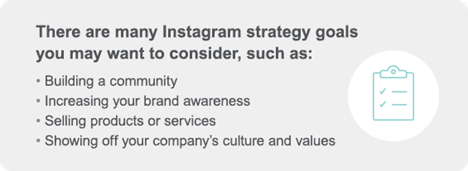
Set social media marketing strategy goals

Setting social media marketing strategy goals for your Instagram page can help you monitor the time, effort, and potential money you’re investing in marketing on platforms like Instagram.

Having clear Instagram engagement goals can help you plan and create content as well as monitor improvement. Marketing strategy goals can also help your team create quality content that aligns with what you aim to accomplish.

Set up a profile using Instagram for Business
Once you’ve set your goals, it’s time to start making your Instagram profile work for you. If your account is not set up as a business profile, consider switching to an Instagram for Business account. Using an Instagram for Business account provides benefits such as:

  • Instagram analytics and tools that show how well your content is performing so you can track your goals more easily and understand your audience demographics and more.
  • Features to expand your profile and sell products, including the ability to create and publish Instagram ads without having to use advertising tools through Facebook.

Creating a unique and on-brand Instagram page, in addition to high-quality content, can help you hook new followers by showing them why your business is worth following.

Create an Instagram bio that tells your story
While not directly tied to follower growth, your Instagram bio is your first opportunity to connect with potential followers and get them to click the follow button. The bio is a place to showcase your brand’s personality, tell visitors about your products or services and what makes it unique. An Instagram bio should include your company’s category/industry, your location(s), contact info and a link to your website. You also can include associated social media account handles.

There’s limited real estate to tell your brand’s story. With only 150 characters available, you need to keep it brief. You can use formatting to organize info in your Instagram bio, such as line breaks to create vertical spacing. If it makes sense for your brand’s voice, consider using emojis to show off your brand’s personality and potentially save character space. You could also use a call to action (CTA) in your bio to set up your profile’s link.

A profile photo can help potential followers instantly recognize that it’s your company. Most businesses use a logo, logomark (the logo without any words) or mascot as a profile photo. You could also use a photo of your sign or storefront–even an image of your signature products. Don’t feel like you have to limit your creativity, but make sure the image can easily identify your brand.

Use one clickable link to get followers to explore pages, content
Instagram offers one clickable link field in the bio for accounts with less than 10,000 followers. Your clickable link is prime real estate to send a potential customer where you’d like them to go. You can use the link to send people to your main website homepage or frequently change out the link to reflect an event you’re promoting or other current content you may produce.

Additionally, tools are available to create a “link in bio” link tree/landing page to offer multiple clickable links for Instagram posts, product pages and other links without leaving the Instagram app. This approach is best for businesses that have numerous offerings and want to drive customer traffic to multiple links or different types of content. No matter which strategy you use, you should use your clickable link to send Instagram users to visit other relevant content.


Create a visual identity and brand voice true to your business
Instagram is all about visuals, no matter the format. Maintaining a consistent visual identity that represents your brand can give your content a cohesive feel. This identity can include your brand colors, tones, and much more. Editing style, filters, and photo composition can all affect your visual identity.

A consistent and unique visual identity can help new followers get to know your brand by just seeing it. If you stay consistent, your Instagram audience will begin to associate the style with your brand unconsciously. No matter what content format you use on Instagram, your content should look like you and tell your brand’s story while adding value to your audience.

Your Instagram captions and text are just as crucial for brand storytelling and helping users find you.

You don’t want to focus solely on visuals, though. Having a brand voice for Instagram can allow you to experiment with all of the Instagram content formats and still consistently sound like your brand voice.

Does your brand use emojis? Will you make memes or repost memes? Does your brand voice use humor? As with visual identity, your brand voice can help your Instagram audience know it’s your business.

Use Instagram content formats to your advantage
Instagram began as an app to share photos. It is now a social media platform that continually releases new features and content formats for users to engage. The platform offers a variety of ways your business could interact with an engaged audience, including:

  • Instagram Carousels: This feature allows for publishing up to 10 photos in a single post.
  • Instagram Reels: This format, reminiscent of TikTok, hosts 15- to 30-second videos that can include audio, visual effects or other creative tools. Reels can be shared in your Instagram feed and discovered on the Instagram Reels tab on the platform.
  • IGTV: Instagram TV, or IGTV, is for videos longer than 30 seconds. IGTV would be used best for a recurring video series.
  • Instagram Stories: Stories are photos or videos that are full-screen, vertical and disappear after 24 hours. They appear at the very top of the app rather than in the news feed. The Stories feature is a good tool for visual storytelling, where you can produce things with a beginning, middle and end. Instagram Stories also can include fun, interactive elements such as stickers, polls and filters, which can increase engagement and get your audience in the habit of viewing your Stories consistently.
  • Instagram Live: Instagram users can live stream video through Instagram Stories in this format. This format allows brands and content creators to connect directly with their followers and target audience through Q and A sessions, demonstrations and so much more.
  • Instagram Guides: This content type is a cross between Instagram Carousels and blog posts. Each guide includes a cover image, title, introduction and optional descriptions for entries that users can build from previously posted content, places, or product listings from your account.


Post and interact with your audience consistently
Building an Instagram following requires posting regularly and interacting with your audience. That said, business owners need to sleep and take vacations. Consider using a tool that lets you schedule and publish Instagram posts, especially if you’re a team of one. There are a variety of tools available at different price points, such as Hootsuite, Sprout Social, Salesforce’s Social Studio and many more that can provide the functionality that meets your goals.

Instagram users expect a steady stream of interesting, engaging or educational content from the users and brands they follow. Having a consistent posting schedule shows your audience that you’re a serious brand worth following.

Responding to comments, mentions and direct messages (DMs) is also crucial for users to feel confident following your business. Your followers are real people with opinions, issues or questions, and responding and engaging shows respect. Additionally, make time to respond when someone mentions or tags your brand in their post –– they’re helping to spread the word about you! It’s easy for users to hit the unfollow button if they feel ignored; don’t let it come to that.

Additionally, you may want to consider developing social media guidelines to help the person managing the Instagram (if it’s not you) to help them navigate interactions with your Instagram followers.

Use hashtags to feed the Instagram algorithm
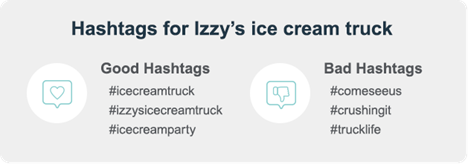
Hashtags help Instagram users find the content they want to see. Instagram hashtags are keywords or phrases with a hashtag symbol before them, such as “#photography.” Instagram captions are not searchable, but hashtags are. Clicking on a hashtag or searching for a specific hashtag will show users all content associated with that tag.

Hashtags can help improve the chances of potential followers finding and engaging with your content. Posts that contain a hashtag get more engagement than those without hashtags. Consider hashtags related to your business that are easy to use, catchy and popular for your posts. You can create a branded hashtag for followers to use when posting about your business.

Using broad hashtags related to your business increases the chance people see your posts from all corners of the world. You may also want to use branded hashtags that are unique to your business to capture more local/relevant attention. If a hashtag is irrelevant to your post, it will not make sense to potential followers or aid your goals.

Help users find you with geotags
Geotags, or Instagram location tags, use a precise location that users can add to a post or Story. The tags can be identified by the GPS in a mobile device and can be geographical (like a city) or a particular business (think like a restaurant). Businesses can create a geotag for their business and start reaping the benefits of using it on posts.

Using geotags helps Instagram compile posts tagged at the location. A geotag can be added at the time of posting or retroactively. Instagram categorizes posts as “top” and “recent” posts by location, and your brand photos will live among the posts from your customers or visitors when they use a geotag while posting about or from within your business.

The “View Information” button within the geotag can link to information about the business. The geotag functions can help with brand awareness and allow potential customers to research your business and see what others have posted about you.

Promote your Instagram on other social media channels
If you have an engaged following on other social networks, let them know you’re on Instagram. Let them know what kind of content you’ll be posting – that way, they can decide if it’s worth their time to follow you in multiple locations. Additionally, use Instagram stories and crosspost them to your Facebook page to help you reach new audiences and increase the likelihood you’ll get the follow on Instagram.

Grow your reach with Instagram ads and campaigns
Instagram ads can get your content in front of a broad, targeted audience and help you reach your goals faster. You can “boost” your social posts to a wider audience or create specific advertisements for products or services. Instagram ads increase the reach of your content as well as include call-to-action buttons. These features help reduce the steps to get viewers to your website or store from the app.

You can buy Instagram ads through their platform. You set a maximum budget of what you’d like to spend for the entire time the ad runs. Costs for Instagram ads can average around $.50 to $1 per click, or cost per click (CPC). You can try out Instagram ads with a small budget and track the insights to see if it’s the right strategy for your business. It can be an effective and targeted way to reach prospective customers in the right stage of their buyer journey.


Consider working with influencers
Influencer marketing is a great way to build a loyal Instagram following. Instagram influencers are basically people who post a lot of content and have a lot of engaged followers. Influencers often work with brands and businesses to help generate interest in their products and services.

The thought of influencer marketing can seem intimidating to smaller businesses but consider working with micro-influencers: content creators with a smaller but dedicated following, often in local markets or within specific categories like food, crafts, etc. Look for popular content creators within your industry with small or large followings that might be interested in your brand.

Think about your own Instagram follower customer base. You could already have an influential (or budding) brand ambassador following you – consider making a collaboration official. The more genuine the relationship between a brand and influencer, the better.


They found you on Instagram – now deliver the great experience you showed them
Instagram growth for your business doesn’t need to be scary or a herculean effort.

With the right resources and planning, you can achieve your marketing goals with new followers and more. After all, it’s about your brand’s ability to connect with real people and showing them great content about what you do best: provide great products or services.

At Heartland, we love helping businesses succeed –– online and offline. That’s why we offer training and resources like our free Unstuck Playbook. This training walks you through easy and effective strategies to get your business from surviving to thriving. We also offer solutionsranging from payments and point of sale to customer engagement and employee management to help entrepreneurs focus on the big picture of their business.

3 Ways to Boost QSR Hiring Strategy

It’s no secret that 2020 highly impacted the entire hourly workforce — and how we hire them. Turnover rates in restaurants have reached a new high with a turnover rate of more than 140%. Restaurant owners are having a hard time getting employees who left the industry to come back, and when they are ready to re-enter the workforce, they are applying to 5-6 jobs at a time. And because restaurants are understaffed, GMs are spending time covering shifts instead of actively hiring, growing the team, or improving the customer experience.

With stakes as high as they’ve every been, its more important than ever to take a look at your current hiring process, and ensure you are following these three hiring tips.

  1. Leverage Technology – With the right technology in place, your GMs can eliminate historically time-consuming tasks. Using the right tools, you can get more eyes on your job posting, automatically engage and screen applicants, give employees the ability to schedule their interviews through their phone, and ultimately free your GMs to focus more on the restaurant, the team, and the customer experience.
  2. Create a referral program – You may be receiving great organic referrals from your employees already, make sure you’re incentivizing them to send more candidates your way. Doing so will increase the quality and quantity of your applicants.
  3. Diversify your job board platforms – QSRs are even finding recent success with using social media platforms such as Facebook and TikTok to find new candidates. If you’re still using only job boards, you are missing out on an increasing number of new applicants who have moved on to other channels.


It’s time to use hiring that just works. Workstream is a text-based recruitment and hiring tool that was built for the hourly workforce.  Enabling companies to track applicants in a dashboard and communicate with candidates via text, enables candidates to upload short videos of themselves and provides analytics and works to automate onboarding.

Be the first to respond to applicants, the first to get them hired, and be the first to be fully staffed. Workstream – hiring that just works. Visit workstream.us/frla to request a demo.